
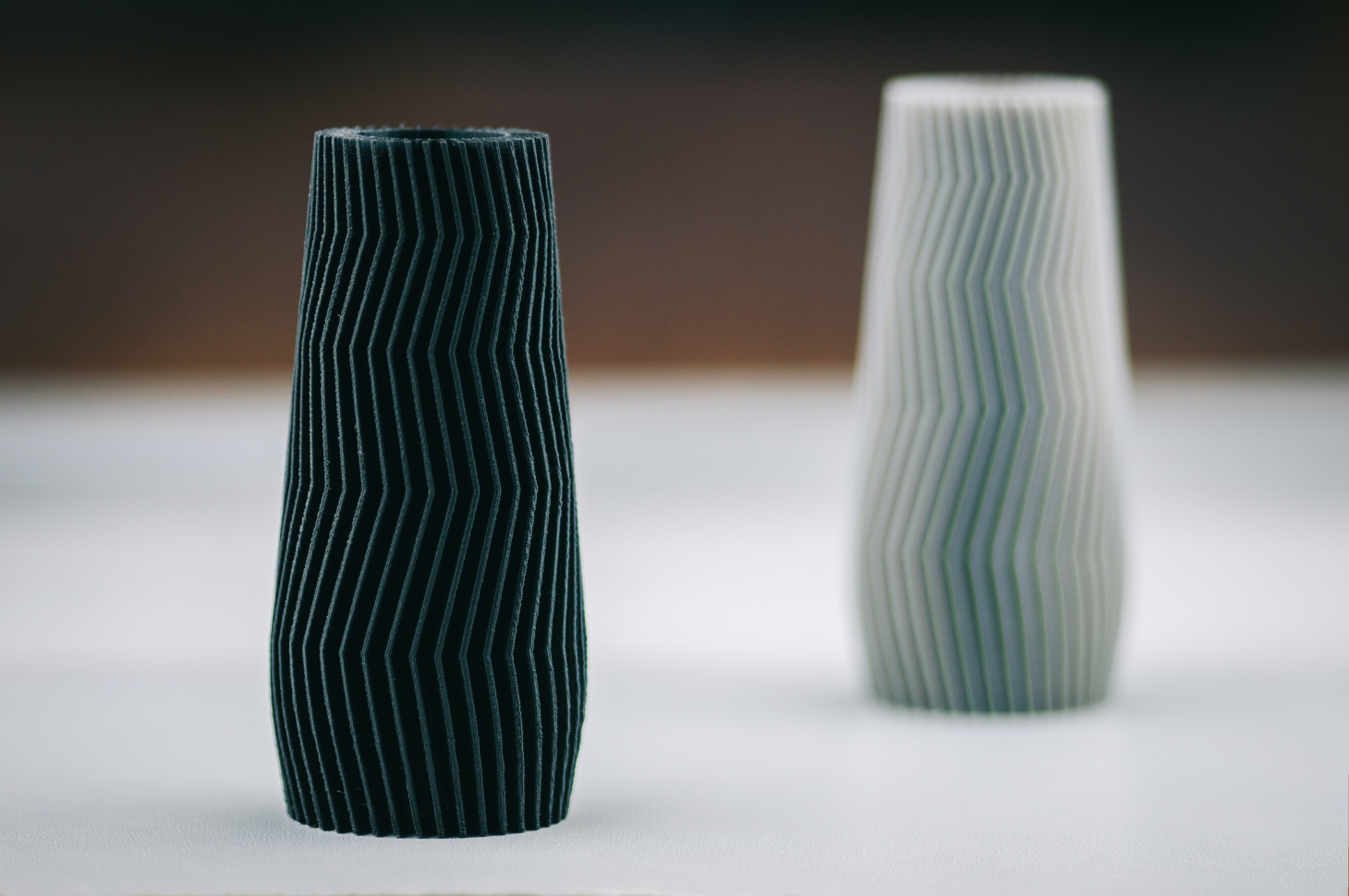
Why Use MJF? Multi Jet Fusion Printing Benefits Explained
MJF Topic
Compared to other 3D printing methods, Multi Jet Fusion 3D printing offers several unique advantages. Below, we explore the key MJF benefits that make this technology an increasingly popular choice for producing high-quality, functional components across multiple industries.
Multi Jet Fusion 3D printing, developed by HP Multi Jet Fusion, uses advanced inkjet printheads to deposit fusing and detailing agents onto a bed of powder, resulting in highly accurate, repeatable, and precise parts. Compared with other additive manufacturing technologies, MJF printing delivers exceptional speed, accuracy, strength, and cost efficiency, making it an ideal solution for manufacturing functional 3D printed parts.
Speed
MJF printing is one of the fastest 3D printing technologies available today. Its high-speed production capabilities are made possible by the HP printheads, which deposit fusing and detailing agents across the entire build area in a single pass. This significantly reduces production time, making Multi Jet Fusion 3D printing an excellent choice for high-volume manufacturing and rapid production environments.
Accuracy
One of the key MJF benefits is outstanding dimensional accuracy and surface finish. The precision of the printheads enables intricate geometries, fine details, and consistent part quality throughout the build. The detailing agent plays a vital role in achieving smooth surfaces and tight tolerances, making HP Multi Jet Fusion ideal for manufacturing precision components and complex engineering parts.
Strength
Multi Jet Fusion 3D printing produces strong, durable components suitable for demanding applications. During the build process, the fusing agent bonds the thermoplastic powder into a dense, high-performance material capable of withstanding significant mechanical loads. This makes functional 3D printed parts produced using MJF suitable for end-use applications rather than just prototyping.
Versatility
Another significant advantage of MJF printing is its material versatility. The technology supports nylon 3D printing, including engineering-grade materials such as PA12 and other advanced polymers that offer excellent strength, flexibility, stiffness, and heat resistance. This versatility makes HP Multi Jet Fusion suitable for industries including automotive, aerospace, healthcare, industrial manufacturing, and consumer products.
Cost-effectiveness
For medium and high-volume production, Multi Jet Fusion 3D printing can be highly cost-effective. Fast build speeds, efficient nesting of multiple parts within a single build, and reduced post-processing requirements help lower overall production costs. The availability of advanced nylon 3D printing materials also reduces secondary finishing operations, delivering further manufacturing efficiencies.
Why Choose Multi Jet Fusion?
The combination of speed, precision, durability, and versatility makes Multi Jet Fusion 3D printing one of today’s leading additive manufacturing technologies. The many MJF benefits, including rapid production, exceptional accuracy, robust material properties, and the ability to manufacture functional 3D printed parts, make it an ideal solution for industries ranging from automotive and aerospace to medical and industrial engineering. As HP Multi Jet Fusion technology continues to evolve, its applications and manufacturing capabilities will continue to expand.