Bearing Selection: The Price of Failure
The Price of Failure
There are three main reasons for bearing failure: bearing fatigue, incorrect lubrication, and the wrong bearing selection in terms of bearing type and material. Addressing these three points when choosing what bearing should be used in each application is crucial – and could help designers make the right decision.
Dealing with OEMs, distributors, and logistics companies, we understand more than most what customers need from a bearing. Whether it is a standard catalogue item or a special order, customers are increasingly looking for suppliers to take responsibility for helping them with bearing specification and selecting the right bearing. That is where it pays to go with experience and expertise.
Bearing Selection: Choosing the Right Bearing Type
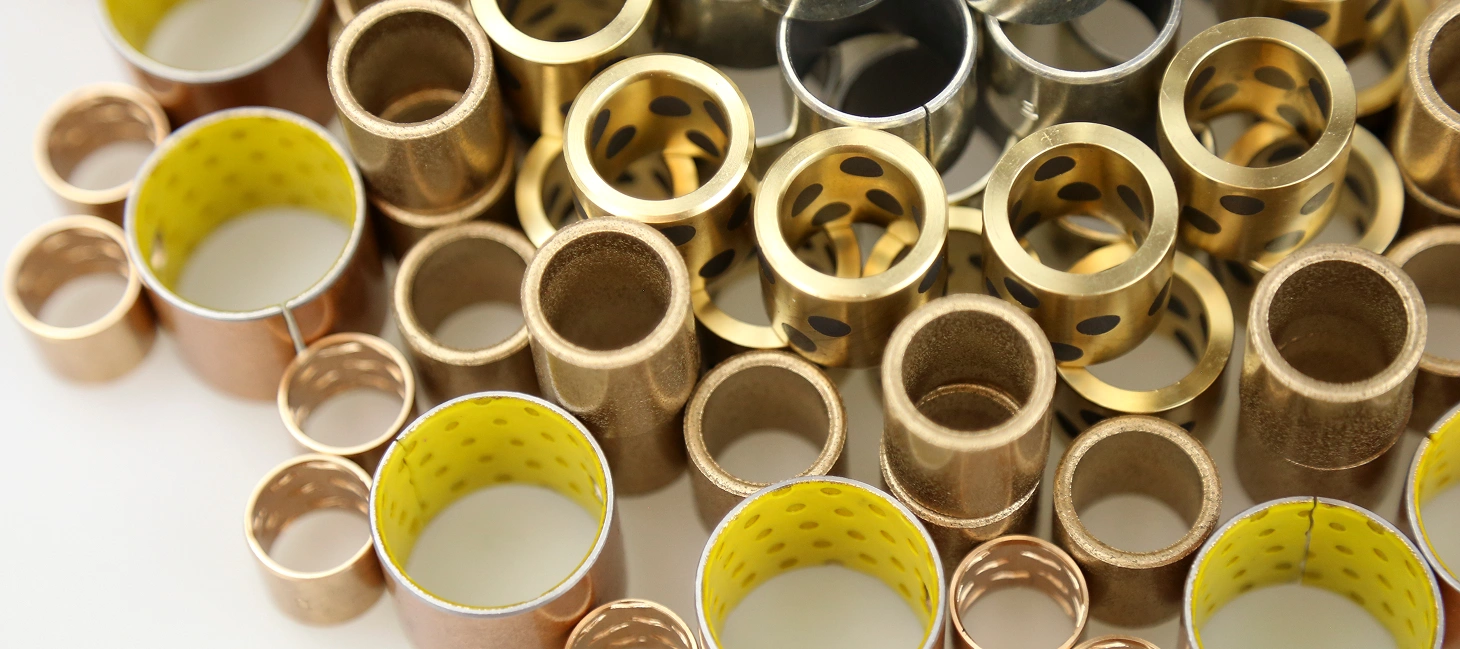
The most important consideration is the type of bearing to suit the application. There are many types to choose from, including plain bearings, ball bearings, roller bearings, and needle bearings, to name a few. Each of these types has many variations; for example, plain bearings can be sintered, wrapped, plastic, composite, or machined from various solid materials. Ball, roller, and needle bearings can be offered in numerous configurations.
The majority of customers know exactly what their bearing needs to do. They know the load, speed, and environmental requirements but need advice on choosing the right bearing that can deliver those capabilities most effectively and cost-efficiently.
This will influence not just the cost of the initial purchase, but potentially other factors including the cost of ongoing maintenance, lifespan of the bearing, and even how efficiently the equipment works.
In some cases, there are clear benefits to using an alternative bearing type. The new Bowman BowMet® range, for example, can take higher loads and withstand corrosion, so it is being used successfully to solve the corrosion problems faced with rolling element bearings, whilst also offering higher load capabilities. In some cases, prices are also lower – a win-win situation.
This is where a whole-market manufacturer and supplier, not restricted to any single type of bearing like some suppliers, can add real value through independent advice.
Material Selection
The choice of material is another important decision that has to be made.
Plain bearings are manufactured in sintered bronze, sintered iron, copper, rolled bronze, cast bronze, various plastics, various composites, stainless steel, and other alloys such as BowMet®, which is made from the ToughMet® alloy.
Ball, roller, and needle bearings can be offered in high carbon chrome steel, stainless steel, plastic, and other materials.
To make things even more complex, the bearing industry rarely stands still. New materials are being developed all the time which can improve the life, load, and corrosion resistance of bearings. Take the new BowMet® range for example, which is manufactured from the copper/nickel/tin ToughMet® alloy, developed by Materion in the USA.
This new material is revolutionising the use of wrapped bearings due to its enhanced capability to take far higher loads and being corrosion-free, thus providing longer life and greater reliability.
Lubrication
This needs serious consideration because bearing life needs to be as long as possible, with no – or minimal – maintenance.
Maintenance is becoming more and more important, and bearings should preferably be maintenance-free. Considerable thought must be given to speed, loads, corrosion, and of course, maintenance.
In some sectors, like marine for example, it is either difficult, cost-prohibitive, or impossible to service bearings because of the environment in which they are operated. In others, such as agriculture or construction, it is the nature of the industry that busy farmers or plant operatives simply will not take the time to keep bearings adequately lubricated.
There are maintenance-free solutions, like those provided by Bowman’s Oilless® or BowMet® ranges, which can deliver significant cost savings throughout the lifetime of the equipment.
Avoid Bearing Failure with the Right Bearing Selection
Above all else, the most important thing is to use a supplier that can take a holistic approach to all bearing types and all materials. Without that whole-market view, you could be missing out on efficiencies that you didn’t even know exist. The right bearing selection guide and expert advice can help reduce the bearing failure cost, improve reliability, and ensure you make the correct bearing specification for every application.