The Limitations of Plain Bearings Manufacturers Who Only Offer One Range of Product or Material
The choice is good. Choice is healthy. Having options allows us to select the most relevant, the most efficient, the most cost-effective, the most attractive, and the most compatible solution. A “one size fits all” approach is rarely appropriate unless one is purchasing a pair of socks. Sartorial convenience aside, choice is what people want.
This is particularly true when selecting a plain bearings manufacturer. Businesses need the flexibility to choose the best solution for their specific applications. Manufacturers who can offer a broad bearing material range and provide impartial advice on the most suitable product for a given application are far better positioned than those who offer only one material and attempt to “shoehorn” it into applications where another solution would perform better.
Here, Craig Clydesdale explores the benefits of product choice and the limitations of manufacturers who restrict themselves to a single bearing material.
Different Characteristics
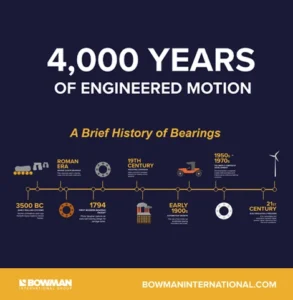
Since the very first bearing was patented by British inventor Philip Vaughan in the eighteenth century, plain bearings have been manufactured from a wide variety of materials to suit an equally wide range of applications. Typical plain bearing materials include wood, bronze, steel composites, ceramics, glass, sapphire and plastics—to name just a few.
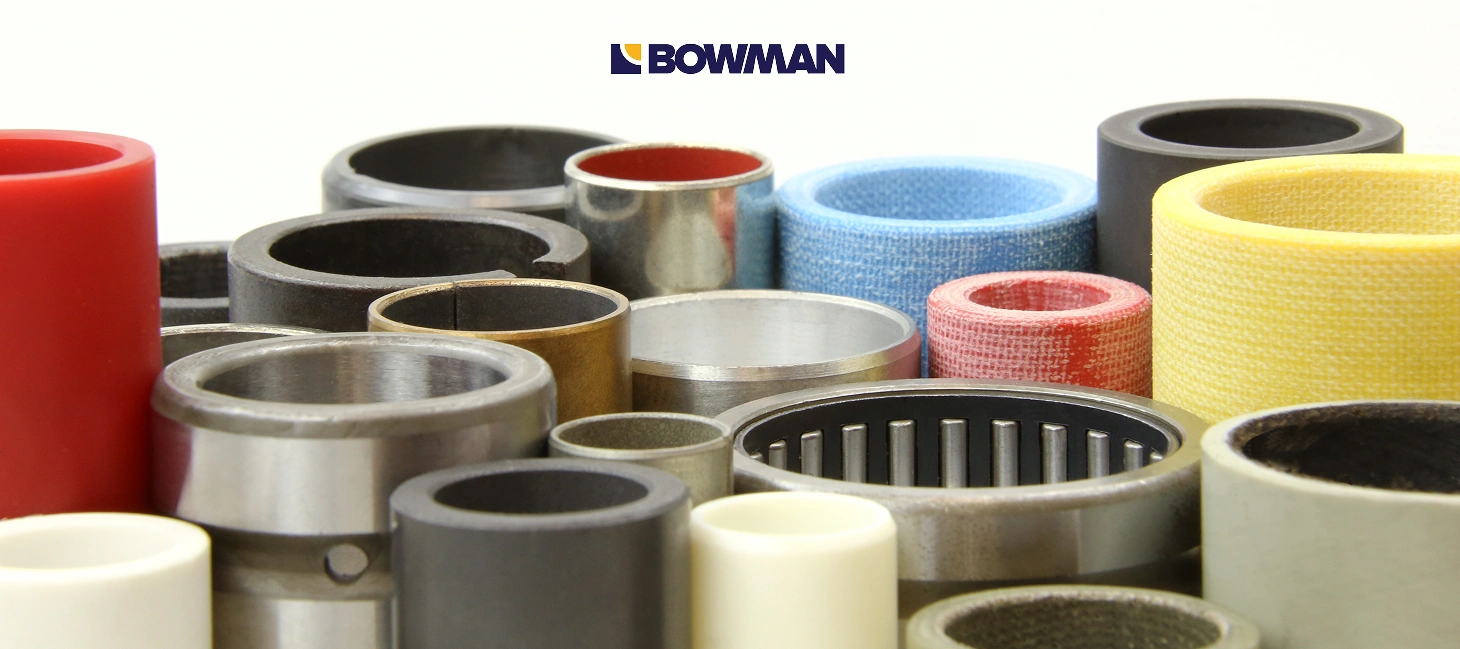
Today, the most common materials are bronze, metal composites, and plastics. Each offers its own unique performance characteristics, making it more suitable than others for particular applications.
For example:
- Sintered bronze bearings are durable, offer excellent load-bearing capability, are lubricant impregnated, withstand high temperatures, operate at high speeds and provide outstanding corrosion resistance.
- Hard rolled bronze bearings are durable, capable of carrying high loads, withstand elevated temperatures, require lubrication, operate at medium to high speeds, and provide excellent corrosion resistance.
- Plastic bearings offer excellent sliding properties and outstanding chemical and corrosion resistance, although they are more limited in load capacity and operating temperature, particularly under prolonged static loading.
- Steel composite bearings, typically of wrapped construction, are generally self-lubricating, capable of carrying high loads, suitable for elevated temperatures and medium-to-high operating speeds, although corrosion protection should be considered.
Having access to a wide bearing material range enables engineers to optimise performance rather than compromise around a single product offering.
Everything in Its Place
Every project requires careful consideration of the operating conditions before selecting the appropriate bearing solution. Temperature, load, lubrication, contamination, speed, and duty cycle are just some of the factors that influence choosing bearing material for a specific application.
Beyond application requirements, engineers must also consider ease of maintenance, lubrication requirements, and overall project cost.
The ability to select the precise bearing material for the operating environment not only improves performance but can also reduce maintenance requirements and help projects remain within budget.
Consider the hypothetical example of a retractable roof installed on a sports stadium.
The project manager approaches a reputable manufacturer to supply the bearings. However, the manufacturer only offers one bearing material. Although that material performs well across many applications, the exceptionally high static loads of the stadium roof eventually cause the bearings to deform during long periods of inactivity. The next time the roof operates, it jams.
The project now requires expensive replacement work, forcing the customer to source a plain bearing supplier capable of recommending a more suitable bearing material.
Although hypothetical, this scenario highlights a very real engineering challenge. Different applications demand different materials. There is no genuine “one size fits all” bearing solution.
Returning briefly to the clothing analogy; it is obvious that leather is an excellent material for many products, but very few people would choose it for shirts or socks.
Conclusion
One important consideration for engineers and buyers is ensuring that the advice they receive is genuinely impartial. When evaluating a plain bearings manufacturer, it is worth considering whether the supplier can offer multiple material options or only a single product range.
The “one material fits all” approach can lead to unnecessary design compromises and, ultimately, premature bearing failure.
Manufacturers able to supply plastic, bronze, steel, composite and other plain bearing materials can assess each application objectively and recommend the most appropriate solution. Unlike suppliers restricted to one material, they can provide unbiased recommendations based on application requirements rather than product limitations.
When making a bearing manufacturer comparison, the breadth of product range and technical expertise should be just as important as price. For complete confidence that the correct bearing has been selected, it is always advisable to work with a knowledgeable plain bearing supplier offering genuine choice.