
Mind The Gap!
Two Reasons Not to Ignore the Joint Gap When Installing a Split Bearing
When you need a new bearing installed quickly, it can be tempting to overlook small details such as the visible joint gap on the inner race halves and clamp rings—but don’t. Correct bearing clearance is essential for reliable bearing performance and long service life.
Here’s why.
No Joint Gaps Can Indicate a Problem
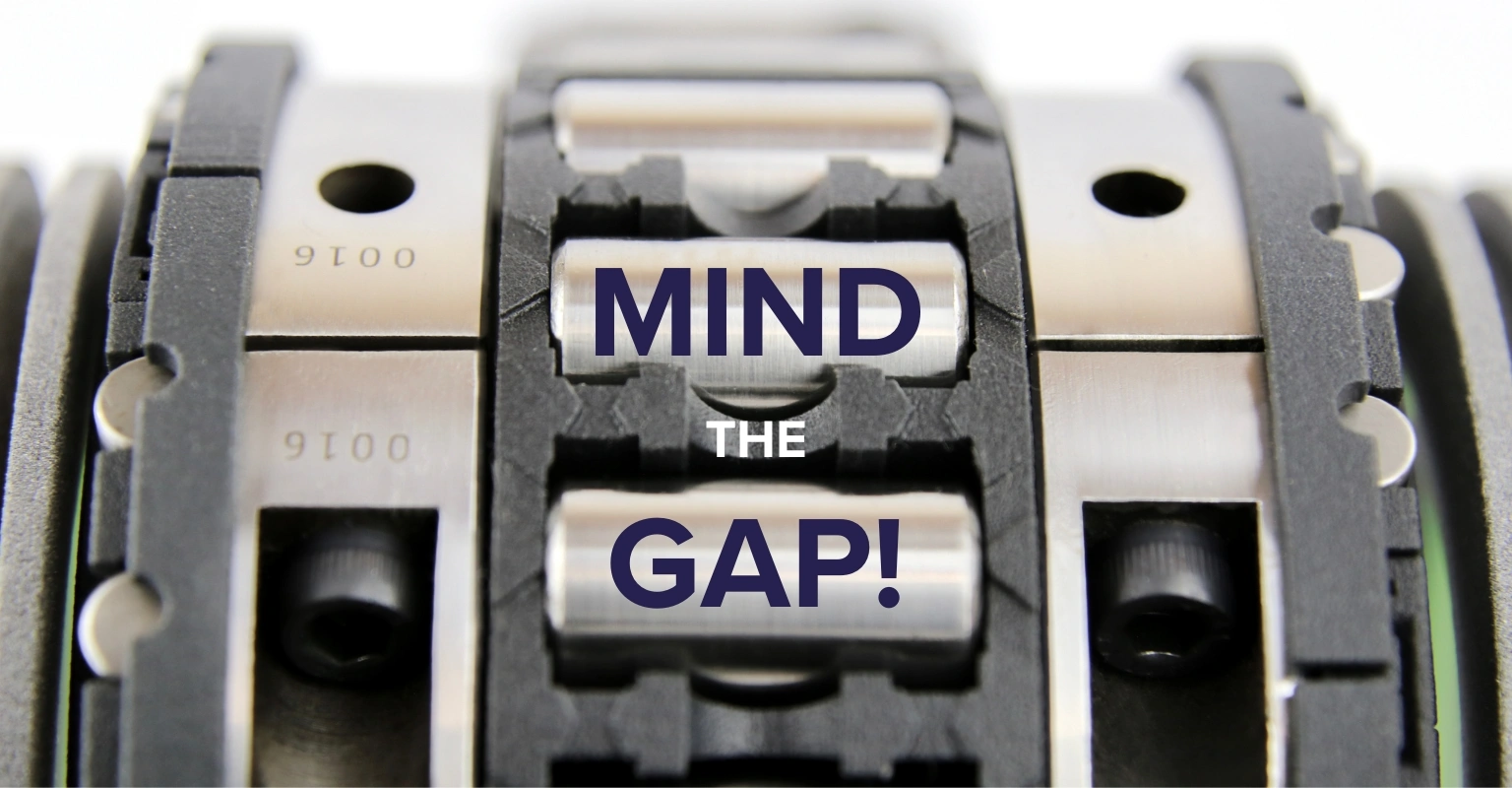
The joint gap ensures that the inner race halves are clamped tightly to the shaft. If there are no visible joint gaps, it may indicate that the shaft is undersized or that the incorrect bearing size has been selected, affecting the required bearing fit.
The bore of the Bowman Split Bearing inner race is manufactured to the same size and tolerance as the shaft. The joint gaps are cut at an angle, allowing each roller to pass progressively over the joints without affecting bearing performance. These gaps confirm that the two race halves are not touching. When the clamp rings are fully tightened, the race is securely fixed to the shaft while maintaining the correct bearing tolerance.
If you do not have visible gaps at both joints, something is wrong. Stop the installation immediately and contact your bearing supplier for technical support.
Installing a Bearing with No Joint Gaps Will Result in Damage
If there are no joint gaps during installation, or if the bearing gap has been set incorrectly, the race halves will press against each other as the rollers pass over the joint during operation.
The result can be fractured joint faces, causing particles of the inner race to break away and enter the bearing. This debris can create additional wear, leading to further damage and potentially premature bearing failure.
It is usually easy to identify a bearing that has operated with incorrect joint gaps, as both faces of the contacting joint will display visible damage.
Getting It Right
To help optimise bearing clearance, maximise bearing life and reduce unnecessary downtime, follow these best practice guidelines:
- Pay close attention during the initial fitting of the inner race halves. Use feeler gauges to check and equalise the joint gaps before fully tightening and applying the specified torque to the clamp ring screws.
- Soft, compressible packing may be used to maintain a gap but ensure it does not protrude beyond the joint face. If it enters the roller path, it may interfere with roller rotation, while material entering the bore may prevent the inner race from seating correctly on the shaft.
- The joint gaps should generally be around 0.5 mm on each side, depending on the accuracy of the splitting operation.
- Aim to keep the joint gaps equal. Where this is not possible, ensure there is still a gap at each joint, even if the distribution is approximately 60/40 or 70/30.
- The clamp rings are manufactured with similar joint gaps to ensure the full clamping force is transferred to the shaft. Apply to the same installation practice used for the inner races, noting that the clamp ring joint gaps are typically around 1.0 mm on each side to achieve the correct running clearance.
No Gap, No Operation
The message is simple: if there are no joint gaps, the bearing should not be put into operation.
Ignoring this critical aspect of bearing clearance explained can significantly reduce bearing life, resulting in premature replacement, increased maintenance costs, and unnecessary downtime.
If you’ve experienced a breakdown and need support quickly, get in touch with our team. We maintain substantial stock inventory and may be able to reduce your lead time considerably.